Starting the New Year with Intention: Creating a Calm & Prosperous Home Office
This post may contain affiliate links. As an Amazon Associate, I earn from qualifying purchases at no additional cost to you. I only share products I truly love or would use in my own home.
Creating a Calm & Prosperous Home Office
The beginning of a new year often brings a quiet pull to reset — not in dramatic, all-or-nothing ways, but through small, meaningful changes that support how we want to live and work moving forward.
For me, that almost always begins with my surroundings and what better way to start than a home office reset.
A clean, organized, and thoughtfully refreshed home office sets the tone for the year ahead — both practically and symbolically. It creates a space that supports clarity, focus, creativity, and a sense of calm. And when our environment feels grounded and intentional, everything else seems to flow more easily.
Why Your Space Matters More Than You Think
Creating a calm and functional workspace isn’t just about aesthetics. Our surroundings quietly influence how we think, feel, and show up each day.
A well-designed office supports:
- Mental clarity, which leads to better decisions
- Efficiency and momentum, making it easier to begin and stay focused
- Clearing old energy, creating room for new ideas and opportunities
- Prosperity psychology, reinforcing confidence and readiness to grow
- A new container for the New Year, one that reflects where you’re headed now
Your office becomes more than a room — it becomes a steady partner in your daily rhythm.
It’s worth saying that a reset doesn’t require buying new furniture or décor. Often, the most meaningful changes come from cleaning, organizing, and rearranging what you already have. A fresh perspective, a cleared surface, or a small shift in layout can completely change how a space feels — without spending a dime.
This process is less about acquiring more and more about working intentionally with what’s already there.
This post may contain affiliate links, which means I may earn a small commission at no extra cost to you. I only recommend items I genuinely use or would choose for my own home.
Step One: Remove What No Longer Serves You
Every reset begins with letting go.
Old paperwork, unused supplies, broken tools, or items tied to past goals quietly take up space — both physically and mentally. Removing what no longer serves you lightens the room and clears mental weight at the same time.
This step doesn’t need to be rushed or overwhelming. Start small. One drawer. One shelf. One pile at a time. Each decision creates a little more breathing room.
Step Two: Create Clear Zones for Focus & Flow
A functional office benefits from clear purpose zones:
- A dedicated work area
- Storage that’s easy to access and maintain
- Space for planning, thinking, or creative work
Simple tools, like a compact desktop power hub, can quietly reduce cord clutter and make a work surface easier to use day to day.
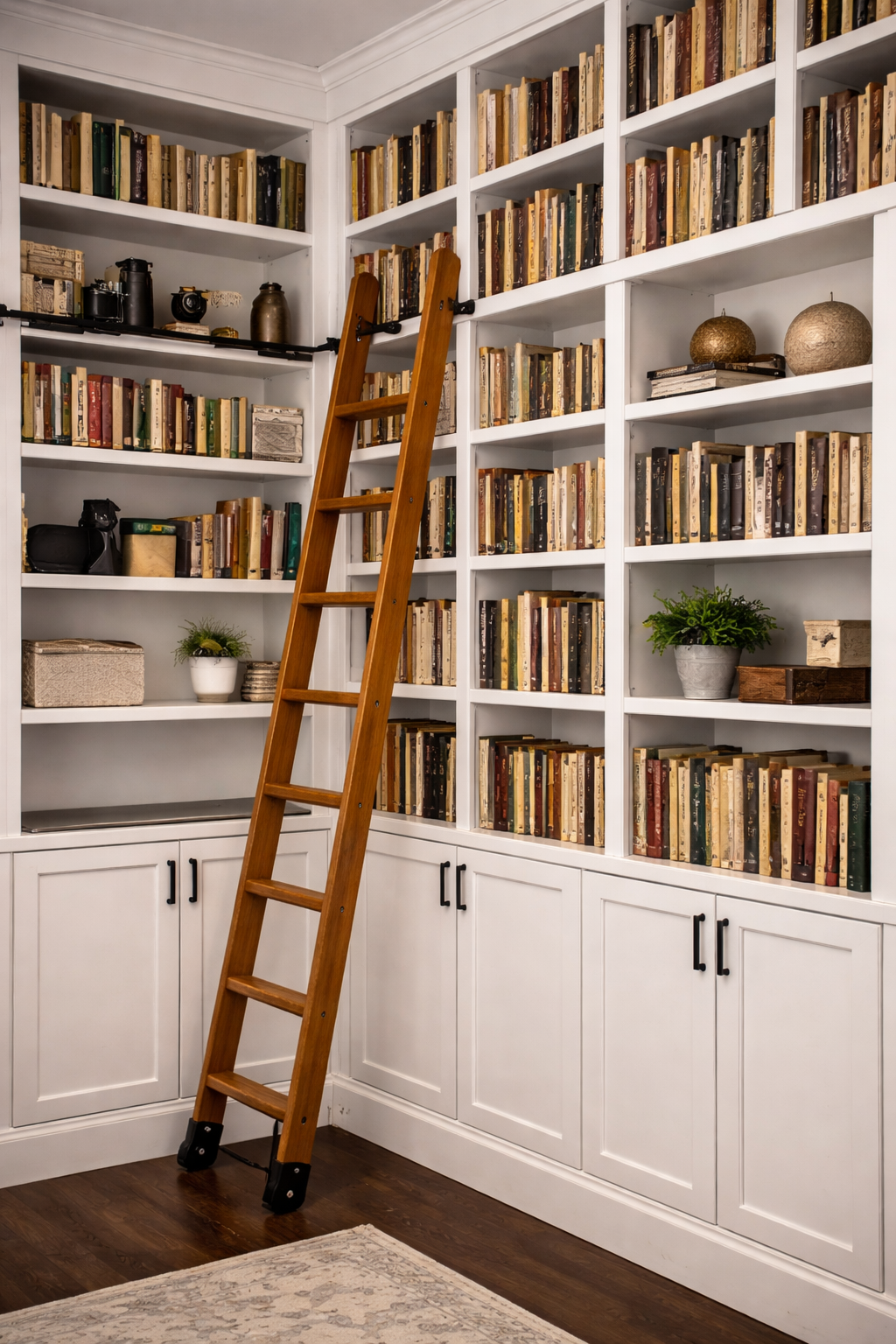
Built-ins can be especially grounding in a space. They provide structure, storage, and visual balance, and can serve multiple purposes — shelving, seating, or even additional work surfaces.
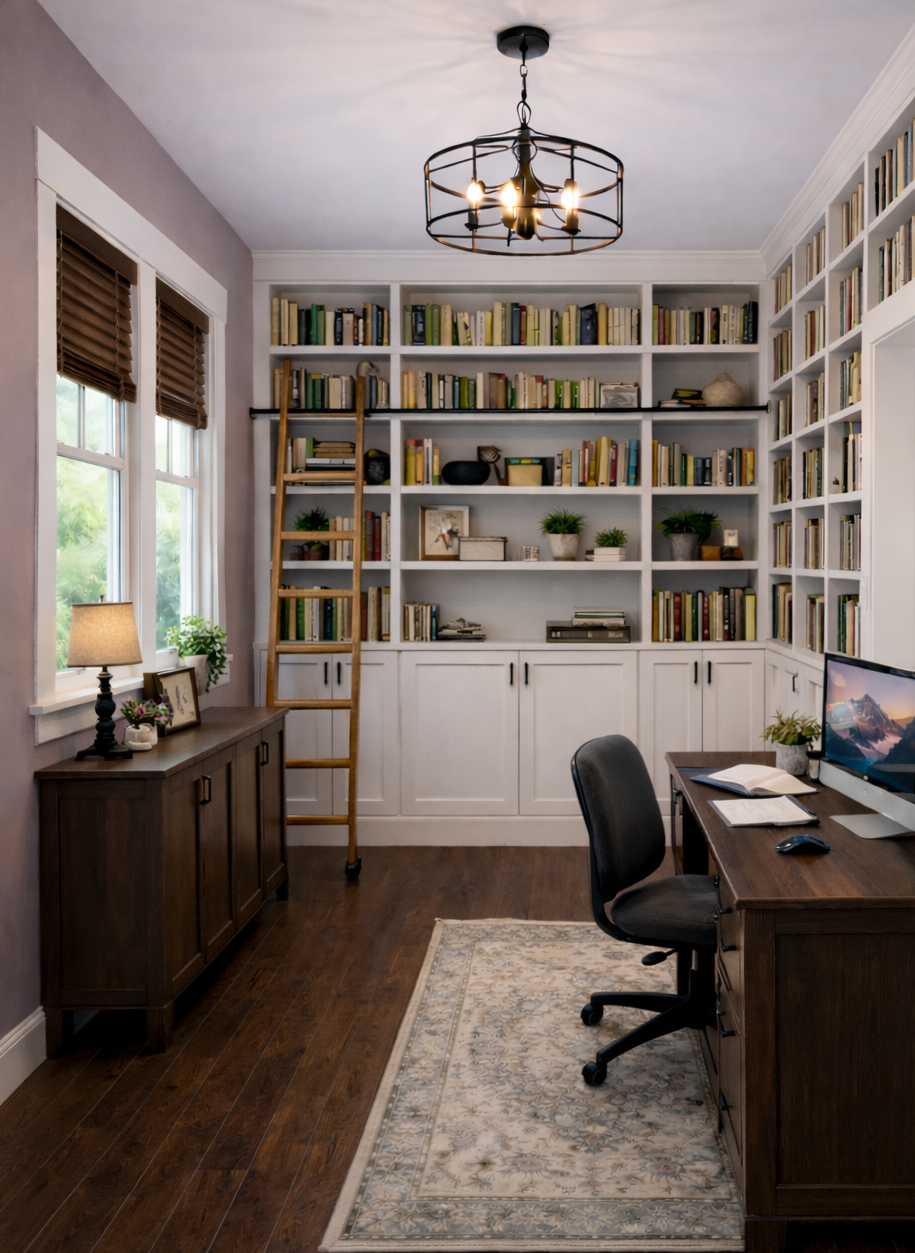
One feature I dream of adding to my own office is a full wall of bookshelves with a library ladder. My office is small — just 5’ x 11.5’ — so thoughtful planning is essential to make the most of every inch.
Adding storage vertically, like simple wood floating shelves, can create breathing room without taking up valuable floor space.
Step Three: Plan the Layout Before Buying Anything
Before purchasing furniture or storage, I always plan the layout on paper.
I use graph paper to map the room, including doors and windows, then cut out scaled “furniture pieces” or built-ins. This allows me to move everything around until the layout feels right — without constantly erasing and redrawing.
This simple step saves time, money, and frustration, and helps prevent buying pieces that don’t truly work in the space.
Step Four: Create a Mood Board to Stay Focused
A mood board helps keep your vision clear and intentional.
You can create one digitally or with a poster board using images, fabric swatches, paint chips, textures, and inspiration pulled from magazines or online sources. Everything you’re drawn to lives in one place.
Having a mood board:
- keeps you focused on your overall vision
- prevents impulse purchases
- avoids trial-and-error decorating
- helps the space feel cohesive rather than pieced together
It becomes a visual guide as you move through the process.
Step Five: Choosing Colors That Support Calm & Focus
Color plays a powerful role in how a space feels. While bold shades can energize, softer or muted tones often create comfort and calm — especially in a workspace.
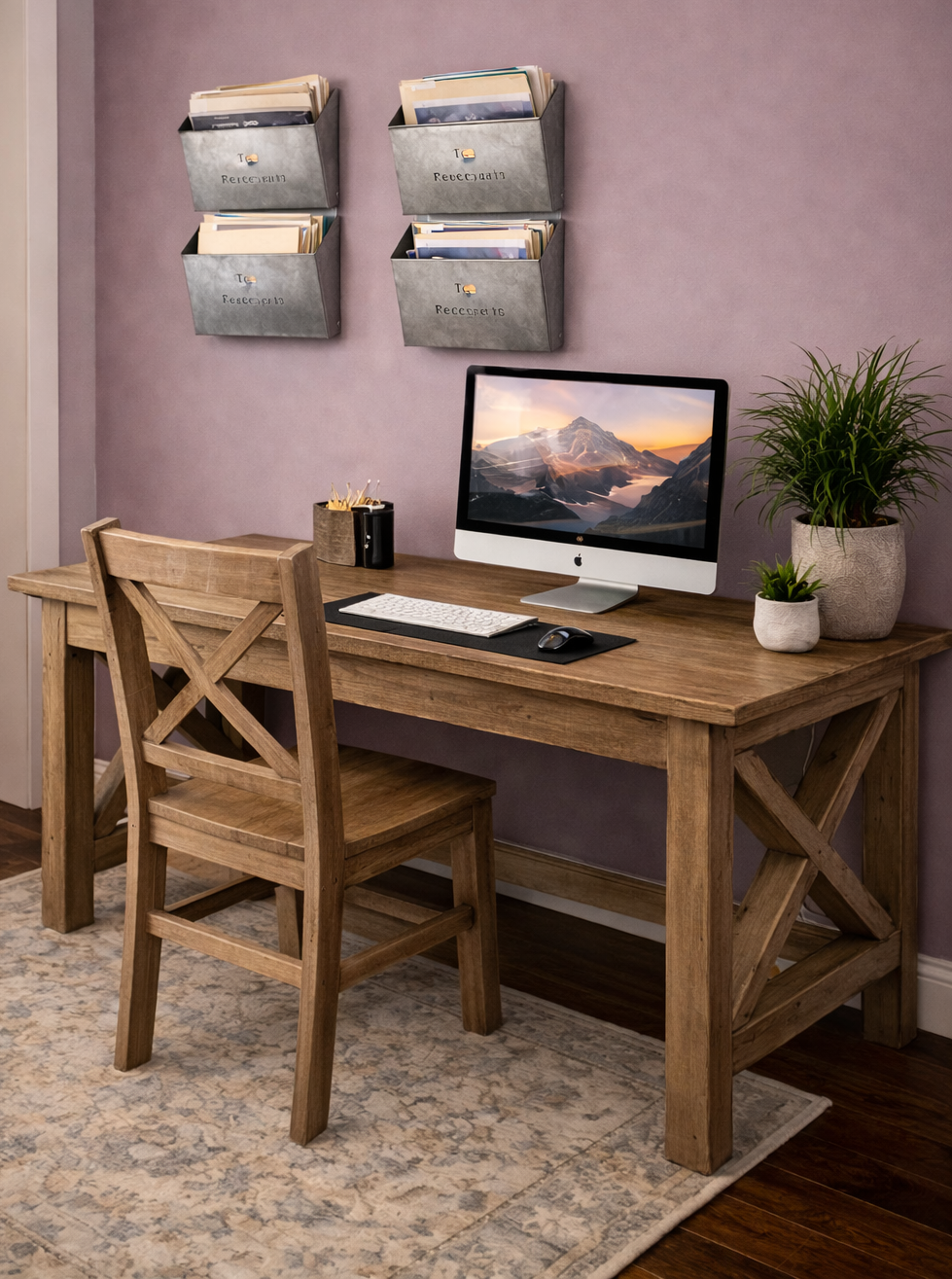
Purple has always been my favorite color, but I wanted something understated. I chose a deeper, muted plum-grey with warm undertones. It gives me the color I love without overwhelming the room, creating a space that feels cozy yet focused.
I kept the existing white trim around the windows and door and plan to paint any built-ins or shelving a soft ivory so the room doesn’t feel too dark. The hardwood floors and espresso-toned desk help ground the space and keep everything cohesive without feeling overly matched.
Color should feel personal. Most shades have variations that can feel calm, welcoming, and supportive — it’s simply about finding the one that feels right for you.
Step Six: Bring the Space Together Thoughtfully
With the layout finalized and colors chosen, it’s time to bring the room to life.
This is where painting happens, rugs are placed, furniture is arranged, the desk is set up, and files are organized. Choose pieces that feel comfortable and inviting — items that make you want to be in the space.
Small additions, like a desk mat or writing pad, can soften a workspace and make everyday tasks feel more intentional.
Don’t feel confined to one decorating style. Mixing elements, textures, and subtle contrasts adds character and makes the space truly yours.
A calm office doesn’t have to be perfect — it just needs to support you.
Enjoy the Space You’ve Created
Once everything is in place, pause and enjoy it.
This space now supports your focus, creativity, and intentions for the year ahead. You didn’t just organize a room — you created a foundation for how you’ll work, think, and grow in the season you’re stepping into.
Sometimes prosperity begins quietly, with a cleared desk, an intentional choice, and a space that finally feels like it’s working with you. A few simple objects — like a wooden perpetual desk calendar — can gently anchor your daily rhythm without adding visual clutter.